
### Blog Post:
Inflatable booster seat options are changing fast for families who travel, but buying one in 2024 means navigating strict new safety standards, confusion over approvals, and more than a few trade-offs. Here’s exactly what you need to know before you pack or purchase your next travel booster.
Key Takeaways
- Pure inflatable booster seats struggle to meet the latest R129 and FMVSS 213 safety standards — some new hybrids like BubbleBum TelePort comply, but pure inflatables face legal and insurance hurdles in many markets.
- User reviews are limited, but crash testing and durability concerns mean not all inflatables are accepted by airlines, taxis, or car rental companies, especially in the US and EU post-2024.
- Check for labeling: only seats with ECE R129/i-Size or FMVSS 213 markings are recognized in most of Europe and the US. Lack of robust third-party crash tests means parents should be cautious with pure inflatables.
- What is an Inflatable Booster Seat and Why Are Regulations Changing?
- How to Choose, Use, and Travel with an Inflatable Booster Seat: Step-by-Step
- Advanced Analysis: Pitfalls, Performance, and Regulatory Gaps
- Conclusion: Should Parents Still Choose Inflatable Booster Seats?
- FAQs About Inflatable Booster Seats
What is an Inflatable Booster Seat and Why Are Regulations Changing?
An inflatable booster seat is a child car booster made from strong air-filled materials, designed to be lightweight and portable for quick use in taxis, airplanes, rideshares, or rental cars. Unlike traditional rigid boosters, inflatables travel easily in backpacks. However, the landscape for legal booster seats has changed — especially after 2024.
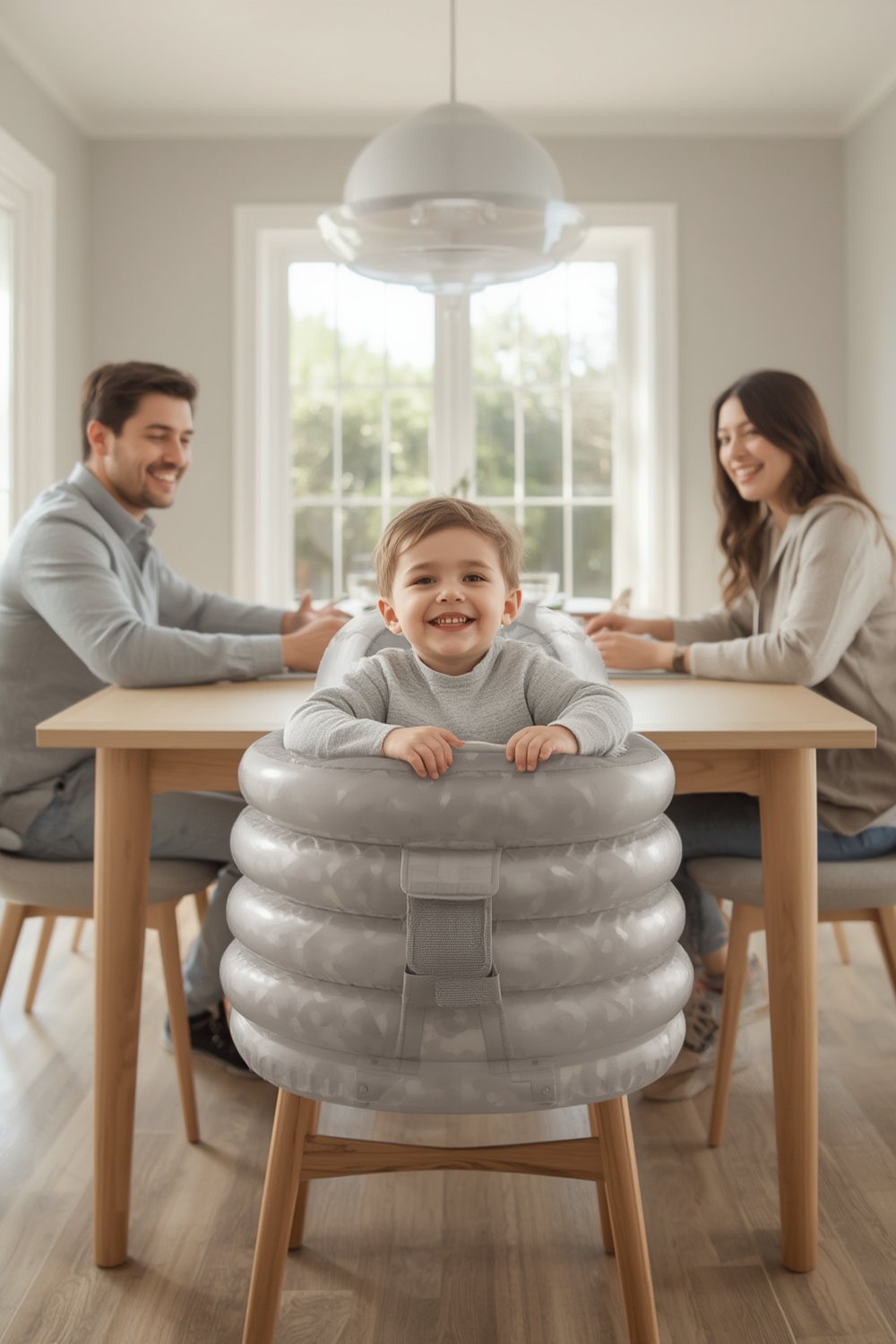
New international safety standards — like UN Regulation R129 (i-Size) in Europe and UK, and FMVSS 213 in the US — now focus on protecting kids not just in crashes, but also from side impacts, labeling accuracy, and seat belt compatibility. The upshot: pure inflatable boosters rarely meet these stricter tests, mainly due to compression performance that can’t match hard shells.
The market has started pivoting. For example, the BubbleBum TelePort (launching 2025) shifts to a hard-shell foldable design and explicitly meets both FMVSS 213 and R129/04 standards for kids 125–150cm, but the previous fully inflatable BubbleBum doesn’t yet claim R129 compliance. Learn more about the R129 transition in Europe.
The older R44 regulation remains valid alongside R129 in the EU through 2024, but new sales will require R129. In the US, inflatables almost always fail regulatory compression standards.
If you’re considering an inflatable seat for travel, check for:
- Height and age requirements (e.g., R129: at least 15 months and 75cm before forward facing)
- Certification stickers (R129/i-Size, FMVSS 213)
- Crash test (preferably with side impact) documentation provided by the manufacturer
For infant travel gear, see our tested suggestions on the best travel stroller options for infants.
How to Choose, Use, and Travel with an Inflatable Booster Seat: Step-by-Step
- Check Regulations in Your Travel Area: Confirm that inflatable boosters are legally approved at your destination (EU/UK: R44 legal through 2024; from 2024, R129 required for new sales; US: FMVSS 213 compliance is strict).
- Read Product Labels: Look for explicit ECE R129/i-Size or FMVSS 213 labeling. Many pure inflatables will only offer R44/04, which may soon become obsolete for purchase in many European countries.
- Assess Your Child’s Size: Use height, not just age or weight. R129 standards prioritize height with universal cutoffs: at least 100cm (roughly age 4) for boosters, 125–150cm for higher-backed models.
- Review Real-World Performance: Since there’s almost no independent crash or durability testing available on pure inflatables, look for third-party test reporting if available. Otherwise, read recent parent reviews and manufacturer FAQs.
- Pack Documentation: Carry the seat’s user manual, official certification (ECE or FMVSS sticker), and manufacturer approval statement — this will help if challenged at check-in, by rental agencies, or in taxi/rideshare vehicles.
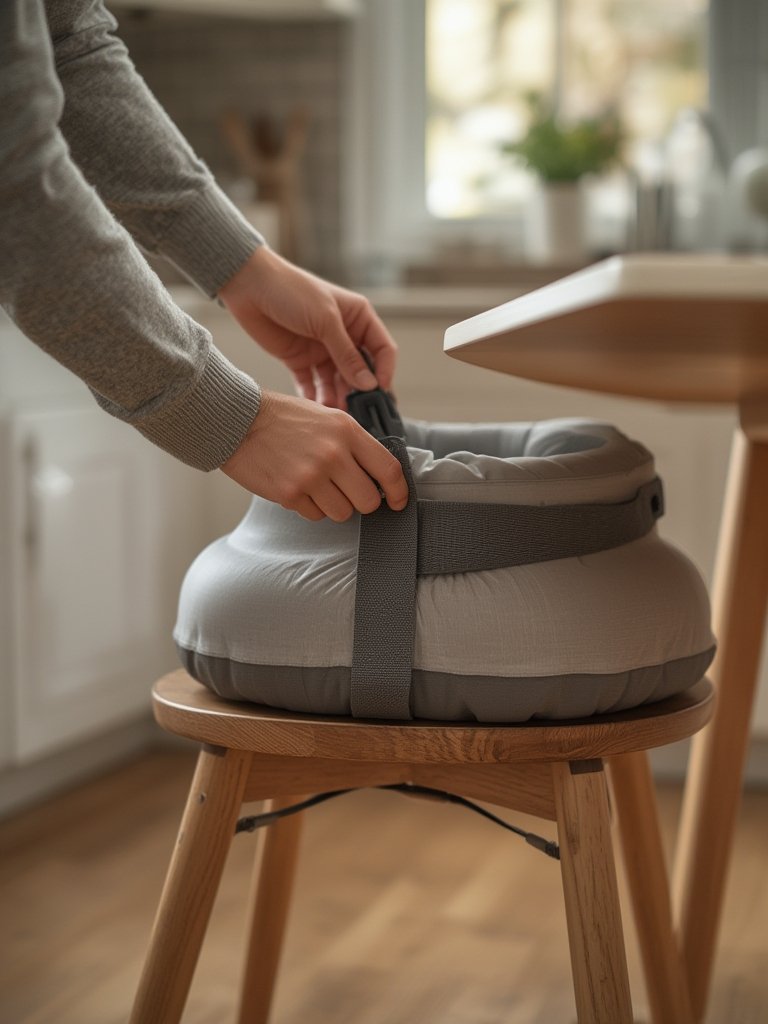
- Install with Care: Position the booster so the lap portion lies flat and the belt crosses the shoulder — not the neck. Especially for inflatables, double-check for slippage once compressed under child weight.
- Be Ready for Plan B: Know local taxi/ride-hail child safety laws. Some areas require approved car seats, others allow exceptions for short trips or allow rentals. For peace of mind on city breaks, research baseless alternative options like baseless infant car seats for taxis as a backup.
See our in-depth guides on what baby essentials to pack via our newborn essentials checklist and learn how baby gear deals for 2025 can help you save.
Advanced Analysis: Pitfalls, Performance, and Regulatory Gaps
Despite the growing popularity of inflatable booster seats for travel, families need to be realistic about their limitations and challenges. Here’s where most issues arise:
Common Pitfalls & Challenges
- Non-Compliance in Key Markets: No pure inflatable seat currently meets US FMVSS 213 crash compression rules; legal in the EU only if carrying a still-valid R44 approval (ending for most new sales after September 2024).
- Weak or No Crash Test Data: The best-selling inflatable, BubbleBum, aligns with R44/04 and upcoming R129/04 dimensions but provides no detailed crash performance or third-party side impact results. Newer rigid/foldable models like BubbleBum TelePort now achieve both R129/04 and FMVSS 213 compliance.
- Lack of Taxi/Airline Clarity: No major airline, rideshare, or taxi company explicitly approves or bans inflatable boosters, but most require standardized, labeled (R129/FMVSS-certified) car seats. Policies are especially strict in the US, with compression concerns sometimes leading to outright enforcement failures at airport check-in.
- Inflation Issues and Durability: There’s little data on puncture resistance, leak rates, or how frequently valves need servicing or upgrades. Some parents report difficulty maintaining air pressure over a week-long trip.
- Comfort Gaps: Without consistent side bolsters or hard shell frame, some children slide sideways or find the seat less supportive on longer rides.
- Insurance Ambiguity: No official insurance exclusions are listed for EU or UK, but in case of a crash, non-compliance with local regulations may void claims.
Comparison Table: Current Travel Booster Seat Options (2024)
| Model | Booster Type | Standards Met | Use Cases | Known Limitations |
|---|---|---|---|---|
| BubbleBum (Classic) | Puré Inflatable | ECE R44/04 | EU/UK legacy taxi, rental cars, travel | Not R129 or FMVSS 213 certified; durability unknown; legal for existing but not new sales (post-2024 EU) |
| BubbleBum TelePort | Rigid Foldable | R129/04, FMVSS 213 | Wider travel, US/EU taxis, rideshares | Bulkier than inflatables, launches 2025 |
| Jovikids i-Size Highback (Foldable) | Foldable, Not Inflatable | R129 i-Size | European travel, extended protection | Not airline-approved, not a “pocket-sized” option |
| Other Inflatable Boosters | Puré Inflatable | Mostly R44/04 or untested | Travel, carpool, backup only (outside strict EU/US markets) | Likely non-compliant for 2024+ new sales; little crash data |
Before making a final decision, parents should weigh the risks of non-compliance and durability against practical portability. Many guides omit the Phase 2 R129 shift — and that in most countries, only labeled, hard-tested models like the BubbleBum TelePort or compact rigid boosters will remain market-legal after R44 phaseout.

When comparing with baseless options or rotating car seats, evaluate not just convenience but long-term safety — see our rotating car seat safety review.
Conclusion: Should Parents Still Choose Inflatable Booster Seats?
Inflatable booster seats have offered practical, budget-friendly travel solutions for families — but starting in 2024, heightened legal scrutiny and incomplete crash-data profoundly limit their role. Unless you can verify up-to-date compliance (R129, FMVSS 213, prominent labeling), you risk being denied boarding, insurance issues, or worse in a crash. Whenever possible, choose current, rigid-foldable boosters or verified, labeled alternatives. Always consult local laws before you travel.
Ready to upgrade? Research thoroughly, choose with confidence, and double-check the inflatable booster seat choice for every destination and ride. When in doubt, check our newborn essentials list for compliant car seat options, or explore tested travel alternatives.
Take action now: review your current travel seat, check the certification, and be proactive about 2024 regulation changes—all to keep your child safer on the road and in the air.
FAQs About Inflatable Booster Seats
Are inflatable booster seats legal in Europe and the UK in 2024?
Inflatable booster seats with ECE R44/04 approval remain legal for use and sale through September 2024 in the EU and UK. After that, new booster seats must carry the R129 approval for sales, but using existing R44 booster seats is still permitted. Always check labeling on your seat.
Can I use a pure inflatable booster seat on US airlines or in American taxis?
No. Pure inflatable boosters do not currently meet US FMVSS 213 requirements, so they are unlikely to be accepted for use in US airlines or taxis. Rigid or foldable alternatives that meet FMVSS 213 have a higher chance of approval.
Are there any recent recalls or major safety concerns for inflatable boosters?
There have been no formal recalls for inflatable boosters reported in 2023-2024, but safety bodies have raised concerns over their inability to meet new compression testing standards (especially FMVSS 213 in the US). Always check the latest regulatory updates and manufacturer statements before use.
How do I check if my inflatable booster seat meets updated standards?
Look for a clear certification label: ECE R129/i-Size for Europe/UK, FMVSS 213 for the US. If your seat only displays R44/04 and was bought after September 2024, it may not be legal for new use. Contact the manufacturer if you’re unsure.
What travel-friendly alternatives exist if inflatables are not permitted?
Consider compact hard-shell foldables (e.g., BubbleBum TelePort), baseless infant car seats, or rotating car seats designed for taxi and travel. Our travel infant stroller guide may also help you identify the right mix of lightweight travel essentials.
—