

Slim car seat 3 across is the solution families need when vehicle space is tight and fitting three child car seats in a single row feels impossible. It’s not just about choosing the right seats—it’s about understanding installation tricks, real car compatibility, and actual safety standards. In this post, you’ll find objective data, realistic advice, and what most guides miss about true 3-across car seat setups.
Key Takeaways
- Slim car seat 3-across setups require meticulous measurement—most “universal” solutions don’t actually fit all cars.
- Crash-tested safety ratings and width are both critical; don’t trust brands’ marketing specs—verify real-world fit.
- Middle seat LATCH limitations and anchor access issues are the main obstacles in compact and midsize cars.
- What Is a Slim Car Seat 3 Across and Why Families Need It
- How to Safely Achieve a 3-Across Car Seat Install: Step-by-Step
- Advanced Analysis & Common Pitfalls: What Most Parents Miss
- Conclusion
- FAQ
What Is a Slim Car Seat 3 Across and Why Families Need It
A slim car seat 3-across setup means installing three child safety seats, side by side, in one back seat row—usually in a compact or midsize car. This isn’t just a problem for large families; it matters for anyone with kids close in age, carpoolers, or caregivers. The goal: keep all children optimally protected by choosing car seats narrow enough to fit while maintaining crash-tested safety.

Car seats vary in width, but most models are too wide to allow three across. The challenge is more urgent in vehicles with smaller cabins and limited LATCH anchor points. According to recent ADAC crash test ratings, only a handful of models combine narrow width with top safety scores.
Parents sometimes overlook that manufacturer measurements alone can be misleading, as the widest point may not be the seat base or fit within curved vehicle seats. Real-world measurements and test-fitting are essential.
For travel-focused families considering compact strollers that work with car seats, see our best travel stroller for infant 2025 review for compatible picks.
How to Safely Achieve a 3-Across Car Seat Install: Step-by-Step
Getting three seats safely across requires a methodical approach. Here’s what to do:
- Measure your vehicle’s rear seat: Use a metal tape measure to check the width of the seat back and seat cushion at their narrowest points. Record both measurements.
- Check available LATCH anchors: Very few cars have three full sets of LATCH. Many have usable anchors only for the outboard seats, and the center seat must use a seat belt install.
- Shortlist truly slim seats: Pick car seats with proven crash test ratings and actual widths under 18-19 inches, not just manufacturer specs. Notable 2024 narrow models (ADAC-tested) include:
- Avionaut Cosmo (Safety rating 1.3, very good)
- Nuna Pipa Urbn (Safety rating 1.6, good)
- Cybex Cloud G (Safety rating 1.5, good)
- Maxi-Cosi Pebble 360 Pro2 (Safety rating 1.5, good)
- Graco SlimFit3 LX 3-in-1 (19.3″ at widest point; BabyGearLab source)
- Test-fit before you buy: The only way to guarantee fit is to try demo models in your vehicle (many specialty baby stores offer this) or order with return potential.
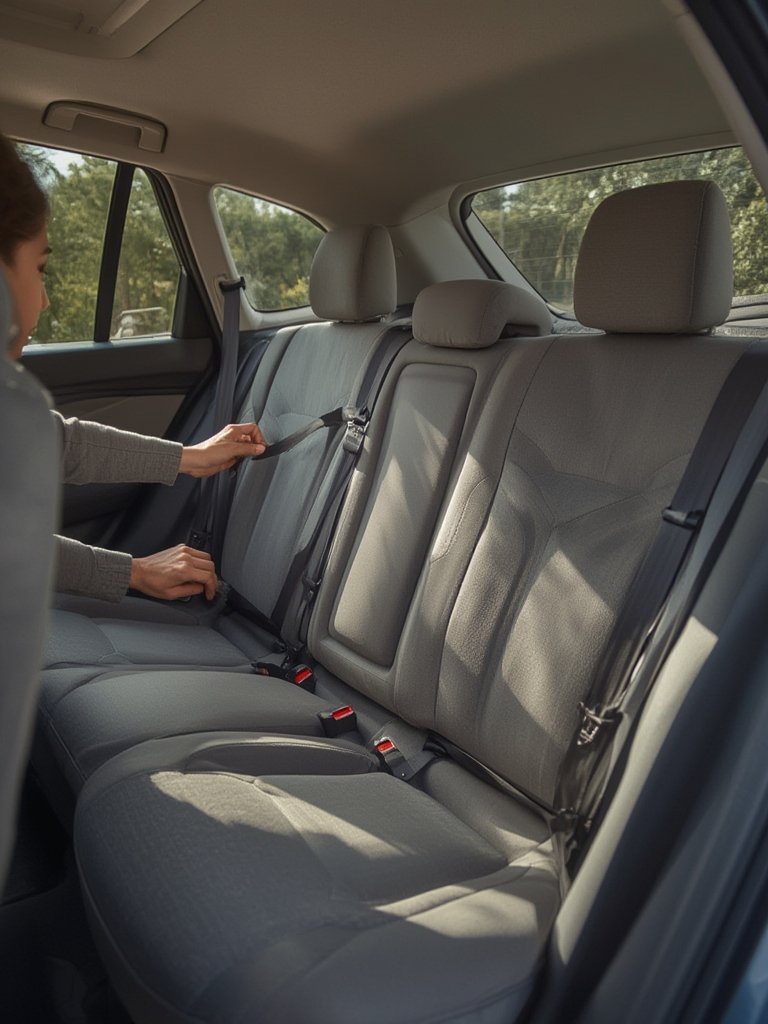
- Install the center seat first: The middle seat is the most difficult. Install it tightly first—usually with the seat belt—to maximize wiggle room for outboard seats.
- Use alternate install strategies: Some cars allow you to use lower anchors from adjacent seating positions for the center (check your manual), but most require a hybrid: seat belt in center, LATCH for outboards.
- Check each fit: Verify that all seats are independently tight (<1 inch movement at belt path), and that buckles are accessible.
- Double-check angles and recline: Especially for infant seats, make sure the required safe angle is maintained, which can be challenging in 3-across.
- Document your install: Take photos and note configurations, so you can replicate the setup after cleaning or travel.
During travel, prioritizing safety is key. Our travel car seat for airplane shows FAA rules and other compact travel seats if you need extra flexibility.
If you need an infant option with no base (helpful for taxis or car seat shuffling), consider tips in our baseless infant car seat safety guide.
Unsure about boosters or part time car poolers? See our inflatable booster seat travel guide for the legalities and airplane safety regulations.
Advanced Analysis & Common Pitfalls: What Most Parents Miss
Even with the best research, it’s easy to make critical mistakes—especially in small or midsize cars. Here are the most common pitfalls and hidden challenges:
- Assuming all slim seats are equal: Safety should always come before size. Not every “narrow” model passes high-speed crash tests like those from ADAC. Prioritize models with proven ratings over marketing claims.
- Overlooking LATCH and seatbelt limitations: Most cars don’t offer a full set of LATCH anchors for all three rear seats. For example, as noted on Kelley Blue Book, cars like the Subaru Forester require hybrid installs for the center seat—missing this can result in dangerous mis-use.
- Not checking real backseat width: Measuring at the wrong spot or skipping the process can make any online advice useless. The only way to guarantee a fit is to check your specific make and model in-person or consult a database like The Car Seat Lady 3-Across fit guide.
- Expecting a universal solution: Even highly-rated seats like the Graco SlimFit3 LX 3-in-1 (noted as 19.3″ wide by BabyGearLab) won’t fit three-across in every vehicle. Seat belt buckle position and contouring will affect the outcome.
- Complicated installation and heavy seats: Some otherwise excellent seats, like the Cybex Sirona G i-Size, are described by ADAC as “very heavy” and with a “complicated” buckle—this can matter for frequent re-installs or petite caregivers.
- Ignoring expiration or warranty info: Most guides skip discussing expiration dates. If buying used or budgeting for the long term, always check and document expiration (frequently 7–10 years).
| Model | ADAC Safety Rating* | Measured Width (inches) | Notes |
|---|---|---|---|
| Avionaut Cosmo | 1.3 (very good) | Not listed | Top score; width measurement not independently verified |
| Nuna Pipa Urbn | 1.6 (good) | Not listed | Very low risk of injury, fits many newborns |
| Cybex Cloud G | 1.5 (good) | Not listed | Clear install steps per ADAC, check for fit in narrow cars |
| Maxi-Cosi Pebble 360 Pro2 | 1.5 (good) | Not listed | Strong crash and install ratings |
| Graco SlimFit3 LX 3-in-1 | — | 19.3 | Known for slim fit, but slightly wider than some rivals |
*1.0 is best (lower is safer in ADAC scoring); see original results for detailed scores per crash test.
For an essentials checklist covering other baby needs, see our popular Newborn Essentials List for more useful links and buying guides.

Are you prepping for the next big sale event? Check the latest deals and discounts in our baby gear 2025 and Black Friday guide for savings across car seats and more.
Conclusion
Fitting a slim car seat 3 across setup in a compact or midsize car requires up-to-date crash data, careful measurements, and a willingness to test combinations until a safe match is found. Never rely solely on manufacturer marketing or general lists; measure your car, prioritize safety ratings, and insist on a test-fit whenever possible.
Ready to start your 3-across journey? Use these steps, check real test data, and make your child’s safety the top priority—your family (and your sanity) will thank you.
FAQ
What is the narrowest car seat available for 3-across installs?
The Graco SlimFit3 LX 3-in-1 is one of the slimmest widely available seats at 19.3 inches, but some international models are even slimmer. Always check real-world measurements and not just manufacturer specs before buying.
How do I know if three car seats will fit in my car?
Measure your back seat at the narrowest point and compare with the combined widths of your chosen seats. Test-fitting is best, as buckle placement and seat bolstering can affect the real fit.
Can the same car seat model be used for all three spots?
Sometimes, but often combining different slim models (e.g. an infant seat with two convertibles) works better. It depends on buckle accessibility, vehicle width, and anchor locations.
What if my car has only two sets of LATCH anchors in the back?
Most vehicles are built this way. Normally, the center seat should use the seat belt for installation, while outboards use LATCH—or all use seat belt if space requires.
How often should I check car seat installs in a 3-across setup?
Check every time you reinstall or move a seat, and at least monthly for tightness and angle. Cabin shifts and regular use can cause seats to loosen over time.